• All Posts
  • CEO Advisory Group
  • newsletter
  • Vistage Events
  • Vistage Speakers
  • Webinars
  • Vistage Testimonials
  • Events
  • podcast Episode
  • Business
  • Vistage Members
  • Future Trends
  • Economic Trends
  • Leadership Strategies
  • Marketing Monday
  • Vistage Business Transaction Center
  • Membership Types
  • Extra News
4 Minutes Read

Zero Economic Profit: Understanding How It Works

In economic terms, "Zero Economic Profits" refers to a situation where a firm's total revenue exactly equals its total costs, including both explicit and implicit costs. This concept is also known as "zero economic profit" and is distinct from accounting profit.

Key Aspects of Zero Economic Profit

  • Definition and Calculation
    Zero economic profit occurs when a firm's total revenue is equal to the sum of its explicit and implicit costs. The calculation takes into account not only the direct monetary costs (explicit costs) but also opportunity costs (implicit costs) associated with the use of resources.

  • Distinction from Accounting Profit
    It's important to note that zero economic profit does not necessarily mean the firm is making no money. A firm can have a positive accounting profit while simultaneously having zero economic profit. This is because accounting profit only considers explicit costs, while economic profit factors in both explicit and implicit costs.
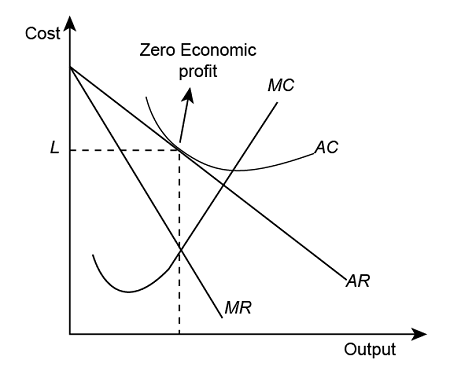
Zero Economic Profits graft
  • Long-Run Equilibrium
    In perfectly competitive markets, zero economic profit is often associated with long-run equilibrium. 

    In this situation:

    1. Firms have no incentive to enter or exit the market

    2. Resources are being used efficiently

    3. Firms are earning just enough to keep them operating in the industry

  • Market Dynamics
    The concept of zero economic profit plays a crucial role in understanding market dynamics:

    • If economic profits are positive, it incentivizes new firms to enter the market

    • If economic profits are negative, firms are motivated to exit the market

    • When economic profits are zero, the market is in equilibrium, with no pressure for entry or exit

Implications and Significance

  • Resource Allocation
    Zero economic profit indicates that resources are being allocated efficiently in the economy. Firms are earning just enough to keep their resources employed in their current use, rather than in the next best alternative.

  • Competitive Markets
    In highly competitive markets, the tendency towards zero economic profit in the long run helps explain why firms in such markets often operate on thin margins.

  • .Business Strategy
    Understanding the concept of zero economic profit is crucial for businesses in assessing their performance relative to opportunity costs and in making decisions about market entry or exit.In conclusion, "Zero Profits" in economic terms represents a state of equilibrium where firms are covering all their costs, including opportunity costs, but not earning excess returns. This concept is fundamental to understanding market dynamics, resource allocation, and long-run equilibrium in competitive markets.

Zero-profit condition

Economic concept related to competitive markets

  • Definition - Occurs when the economic profit per firm in an industry is driven down to zero by competition

  • Market Competition - In a perfectly competitive market, firms continue to enter until there is zero profit per firm

  • Variables - Key variables include price of output (p), price of input (w), amount of output (f(x)), and amount of input (x)

  • Profit Function - Profit function is to maximize (price of output * amount of output) - (price of input * amount of input)

  • Contestable Markets Theory suggests that firms may set prices as if potential entrants were already in the market, even without actual entry

Zero profit is an important concept in economics, and its significance can be explained in simpler terms with some practical examples. Here's why it matters:

Market Equilibrium

Zero profit indicates a state of balance in the market. It's like a sweet spot where businesses are making just enough to keep going but not so much that everyone wants to jump in.

  • Example: Food Truck Business
    Imagine a city where food trucks are becoming popular. At first, some trucks make big profits. This attracts more food truck owners to the area. As more trucks arrive, competition increases, and profits start to shrink. Eventually, the market reaches a point where food truck owners are making enough to cover all their costs (including the salary they could have earned elsewhere), but not much more. This is zero economic profit.

    City with zero economic profits

Resource Allocation

When industries reach zero profit, it suggests that resources are being used efficiently across the economy.

  • Example: Tech Startups
    During a tech boom, many people might leave their jobs to start new companies. As the market becomes saturated, some startups succeed while others fail. Eventually, the industry settles into a state where starting a new tech company is about as profitable as other career options. This indicates that talent and resources are being distributed efficiently between tech and other sectors.

Long-term Sustainability

Zero economic profit doesn't mean businesses are failing; it means they're sustainable in the long run.

  • Example: Local Bookstore
    A bookstore owner might earn enough to pay all the bills, pay herself a salary comparable to what she could earn elsewhere, and keep the store running smoothly. While she's not getting rich, the business is stable and can continue operating indefinitely. This is a state of zero profit.

Market Entry and Exit Decisions

The concept helps explain why businesses enter or leave markets.

  • Example: Rideshare Driving
    When rideshare apps first launched, many drivers earned high profits. This attracted more drivers, increasing competition. Eventually, earnings settled to a point where driving was about as profitable as other similar jobs. At this point (zero economic profit), the number of drivers stabilizes – there's no rush of new drivers joining, nor are existing drivers quitting en masse.

Understanding True Profitability

Zero economic profit helps businesses and individuals make better decisions by considering all costs, including opportunity costs.

  • Example: Home-based Business
    Someone might start a home-based business and celebrate making $50,000 in their first year. However, if they left a job paying $60,000, they're actually experiencing an economic loss of $10,000, even though they have a positive accounting profit. This understanding can help them make better decisions about continuing or changing their business strategy.

In summary, the concept of zero economic profit is important because it helps explain market behavior, guides resource allocation, indicates market stability, and assists in making informed business decisions. It's a key idea for understanding how markets function and how businesses operate in the long term.


Sources

  • https://library.fiveable.me/key-terms/microeconomic-analysis-for-business-decisions/zero-economic-profit

  • https://en.wikipedia.org/wiki/Zero-profit_condition

  • https://homework.study.com/explanation/what-does-it-mean-when-a-company-makes-zero-economic-profit.html

  • https://socialsci.libretexts.org/Bookshelves/Economics/Economics_(Boundless)/9:_Production/9.3:_Economic_Profit

Business

0 Comments

Write A Comment

*
*
Please complete the captcha to submit your comment.
Related Posts All Posts
07.19.2026

How AI Productivity Gains Are Transforming Business Strategies Today

Update AI's Impact on Business Strategies In today’s fast-paced business environment, the introduction of artificial intelligence (AI) is transforming the way companies operate. From optimizing workflows to enhancing decision-making, AI's productivity gains are not only boosting efficiency but also redefining strategic frameworks across industries. Business leaders are increasingly recognizing the potential of AI to streamline operations, cut costs, and significantly enhance customer satisfaction. As organizations leverage AI technologies, they are uncovering new methods for improving service delivery and driving innovation in their products. Why CEOs Should Embrace AI Now The urgency for CEOs and business owners to integrate AI into their operations has never been greater. A recent survey indicated that 75% of organizations utilizing AI reported a notable increase in productivity. This capability allows leaders to allocate their resources more effectively, focusing on core business functions while AI handles repetitive tasks. For example, customer service chatbots can manage routine inquiries, freeing up human employees to tackle more complex problems that require nuanced thinking. As we move further into the digital age, those who hesitate to adopt AI risk being left behind in a competitive market where efficiency can lead to market dominance. The Future of Work in an AI-Driven World As AI technologies advance, the concept of work itself is evolving. Companies are not only adopting AI as a tool but are also reshaping their entire organizational structures to integrate this technology meaningfully. Collaborative robots, or cobots, are becoming commonplace in manufacturing and service sectors, working alongside humans to enhance output. This collaboration opens up new avenues for job creation, where human workers take on more strategic roles that require creativity and emotional intelligence—qualities machines cannot easily replicate. Leaders must prepare their teams for this transition, encouraging upskilling and reskilling in areas that complement AI technologies. Case Studies of Successful AI Implementation Many companies are already reaping the benefits of AI integration, serving as models for others to follow. For instance, a leading retail company reported a 30% increase in sales through personalized marketing driven by AI analytics, allowing them to connect with customers in an unprecedented manner. Another technology firm managed to accelerate its software development cycles by 40% through AI-powered automation, significantly improving their time-to-market and competitive edge. These success stories exemplify how thoughtful AI implementation can lead to significant business growth and adaptability. Analyzing such examples can help other organizations devise their own strategies for successful AI adoption. Challenges in Integrating AI Solutions However, while the advantages of AI are clear, the challenges should not be underestimated. Many organizations face obstacles such as data privacy concerns, high implementation costs, and a skills gap in the workforce. Business leaders must address these challenges head-on by investing in proper training and creating robust policies that foster a safe and encouraging environment for AI use. Companies should also prioritize transparent communication with stakeholders and customers about how AI is being used, which can mitigate fears and improve trust in AI applications. The Road Ahead The landscape of global commerce is shifting dramatically in the wake of AI advancements. As the technology continues to evolve, it will be imperative for business leaders to stay ahead of trends that dictate the market. To thrive in an AI-enhanced economy, executives must foster a culture of innovation and adaptability, embracing continuous learning to leverage AI effectively. This adaptability will not only help businesses respond to market changes but also position them as forward-thinking leaders in their industries. In conclusion, the productivity gains from AI are not merely a passing fad; they signify a fundamental shift in the way businesses operate. Leaders who understand and embrace these changes will enhance operational efficiency, improve customer experiences, and ultimately position themselves strategically for future growth. Now is the time for businesses to start reimagining their strategies around AI capabilities—those who act decisively and intelligently will emerge as the leaders of tomorrow, setting new standards for excellence in their respective sectors. Embracing AI is not just about survival; it is about thriving in a fast-evolving business landscape.

07.18.2026

Discover How AI Productivity Gains Are Redefining Business Strategies

Update The Rise of AI in Business Productivity Artificial Intelligence (AI) is no longer a futuristic concept; it has become a formidable force in reshaping industries and enhancing productivity. For CEOs and business leaders, AI stands as a beacon of potential, offering innovative ways to streamline operations, reduce costs, and drive sales growth. The latest advancements in AI technologies, such as machine learning and data analytics, empower businesses to make informed decisions faster than ever before. Moreover, these advancements are not limited to large enterprises; small and medium-sized businesses are also increasingly adopting AI solutions, democratizing access to powerful tools that were once reserved for the big players. Real-World Applications of AI Across various sectors, companies are leveraging AI to enhance productivity. For example, in manufacturing, AI-driven robotics automate assembly lines, increasing speed and accuracy. In retail, AI systems analyze consumer behavior to optimize inventory management and personalize marketing strategies, which can significantly boost customer engagement. According to recent reports, businesses adopting AI technologies can increase their productivity by as much as 40%. This dramatic shift emphasizes the importance of learning about AI's practical uses in transforming operations. Furthermore, industries like finance are utilizing AI for fraud detection through sophisticated algorithms that analyze transaction patterns, thereby protecting funds and enhancing security for consumers. Future Predictions: Where AI is Heading The future of AI in business is filled with opportunities and challenges. As technology evolves, we can expect even more sophisticated AI applications to emerge. Experts predict that by 2030, businesses prioritizing AI integration will dominate the market. In sectors like healthcare, AI is set to revolutionize diagnostics and treatment plans, ultimately leading to better patient outcomes and significant cost savings. Additionally, as AI becomes more sophisticated, it is anticipated that predictive models will enhance strategic planning across various industries, helping businesses to monitor market trends and consumer preferences more acutely. Diverse Perspectives: AI's Role in Workforce Dynamics While AI promises to enhance productivity, it raises important questions about the workforce. Critics argue that automation may displace jobs, creating a talent gap. As AI continues to evolve, roles in traditional sectors may indeed undergo significant changes, leading some to feel threatened by the shift. On the other hand, advocates believe that AI will create new roles that prioritize human creativity and emotional intelligence, which machines cannot replicate. As companies navigate these dynamics, it becomes essential to foster a culture of lifelong learning among employees to prepare for the AI-driven landscape. Training programs tailored to equip staff with skills complementing AI technologies are critical for ensuring a smooth transition and maintaining employee morale. Actionable Insights for CEOs and Business Leaders To harness AI's full potential, business leaders should start by identifying areas within their operations ripe for AI implementation. This might include automating repetitive tasks, improving customer service through AI chatbots, or utilizing predictive analytics for better decision-making. Furthermore, creating cross-departmental teams dedicated to exploring AI solutions can lead to diverse perspectives that foster innovation. Investing in employee training on AI technologies can also bridge the skills gap and encourage a more innovative workplace culture. As teams grow more accustomed to AI tools, their creativity can be unleashed, leading to groundbreaking ideas and improvements. Conclusion: Embrace Change or Fall Behind The integration of AI into business operations represents a critical turning point in how industries function. CEOs and business leaders who embrace this change can drive their organizations toward substantial productivity gains. As we continue to explore the possibilities of AI, staying informed and adaptable will be crucial for thriving in an increasingly competitive market. Regularly updating your AI strategy to incorporate the latest developments will not only keep you relevant but can also inspire confidence in your leadership. If you’re eager to dive deeper into AI’s transformative capabilities, consider participating in upcoming webinars or events focused on leadership strategies and future trends in AI. Networking with fellow leaders will also provide valuable insights into how others are navigating this rapidly changing landscape.

07.08.2026

Unlocking Proven Business Growth Strategies for Today's CEOs

Update The Growth Paradigm Shift: Understanding Today's Business LandscapeIn a rapidly evolving corporate environment, CEOs face unprecedented challenges and opportunities. The demand for adaptive leadership strategies is ever-increasing. Understanding how to navigate these changes effectively is essential for sustained growth in any sector. Market demands shift quickly, influenced by technological advancements and changing consumer preferences, making it imperative for leaders to stay informed and flexible.Identifying Proven Strategies for Business GrowthCentral to unlocking potential within any organization is the identification of scalable strategies that have a proven track record. Business leaders must adopt innovative approaches that not only streamline operations but also enhance customer engagement. Strategies such as leveraging digital transformation, refining customer experience, and cultivating a culture of continuous improvement have been identified as key drivers of business growth. For instance, implementing cloud solutions can facilitate remote collaboration and efficient project management, which is particularly important in today’s hybrid workplace environments.The Role of Data in Strategic Decision-MakingIn today’s information-drenched world, data-driven decision-making has become a fundamental aspect of strategic business planning. Utilizing data analytics can help CEOs and business leaders identify trends and customer preferences, enabling them to tailor their strategies accordingly. This analytical approach leads to smarter investment choices and more effective resource allocation. Additionally, predictive analytics can help businesses forecast sales trends or inventory needs, further enhancing operational efficiency and responsiveness to market changes.Building a Resilient Organization: The Importance of LeadershipWith market volatility at an all-time high, the need for resilient leadership is paramount. Effective leaders not only respond to challenges but also instigate proactive change by embracing resilience within their teams. This involves fostering a safe environment where employees can communicate openly and innovate freely. By building trust and encouraging collaboration, leaders can navigate even the most tumultuous business climates. Furthermore, investing in employee well-being and development can cultivate loyalty and spur motivation, which are critical to sustaining a competitive workforce.Future Trends: Staying Ahead of the CurveForecasting future trends in any industry is crucial for business leaders looking to secure their organization’s position in the market. Today, staying connected with global movements—whether they relate to technology, customer behavior, or economic fluctuations—provides a competitive edge. CEOs should actively seek out networking opportunities and remain engaged with other thought leaders to gain insights into future innovations and possible disruptions. Engaging in industry conferences or utilizing professional networks can unveil pathways to new collaborations or strategies that may not have been considered otherwise.Leveraging Technological AdvancementsMoreover, business leaders must embrace technological advancements as core components of their growth strategies. Emerging technologies such as artificial intelligence, machine learning, and blockchain are reshaping industries and creating opportunities for growth. By adopting these technologies, organizations can improve operational efficiencies, enhance customer insights, and gain a significant advantage over competitors who are hesitant to adapt.Conclusion: Taking Action Towards GrowthIt’s essential for CEOs to recognize the value of continual growth and adaptation in their business journeys. By implementing proven strategies, understanding the value of data, fostering resilient leadership, and keeping an eye on future trends, leaders can not only sustain their organization but thrive in it. Resources available through platforms such as Vistage and the CEO Advisory Group can enhance their growth strategies significantly. Embracing a mindset of lifelong learning and adaptability will empower organizations to not just survive but to lead in the ever-changing business landscape. CEOs who prioritize these factors are more likely to create sustainable success for their organizations.

© 2024 CEO Advisory Group | Agility Engineers, LLC All Rights Reserved. 11877 Douglas Rd, Suite 102, #328, Alpharetta, GA 30005 . Contact Us . Terms of Service . Privacy Policy

eyJjb21wYW55IjoiQ2xhcmVuY2VXaWxsaWFtcy5jb20iLCJhZGRyZXNzIjoiMTE4NzcgRG91Z2xhcyBSZCwgU3VpdGUgMTAyLCAjMzI4LCBBbHBoYXJldHRhLCBHQSAzMDAwNSIsImNpdHkiOiJBbHBoYXJldHRhIiwic3RhdGUiOiJHQSIsInppcCI6IjMwMDA1IiwiZW1haWwiOiJlbWFpbG1lQGNsYXJlbmNld2lsbGlhbXMuY29tIiwidG9zIjoiUEhBK1BITjBjbTl1Wno0OFpXMCtWMmhsYmlCNWIzVWdjMmxuYmkxcGJpQjNhWFJvSUhWekxDQjViM1VnWVhKbElHZHBkbWx1WnladVluTndPeUI1YjNWeUlIQmxjbTFwYzNOcGIyNGdZVzVrSUdOdmJuTmxiblFnZEc4Z2MyVnVaQ0I1YjNVZ1pXMWhhV3dnWVc1a0wyOXlJRk5OVXlCMFpYaDBJRzFsYzNOaFoyVnpMaUJDZVNCamFHVmphMmx1WnlCMGFHVWdWR1Z5YlhNZ1lXNWtJRU52Ym1ScGRHbHZibk1nWW05NElHRnVaQ0JpZVNCemFXZHVhVzVuSUdsdUlIbHZkU0JoZFhSdmJXRjBhV05oYkd4NUlHTnZibVpwY20wZ2RHaGhkQ0I1YjNVZ1lXTmpaWEIwSUdGc2JDQjBaWEp0Y3lCcGJpQjBhR2x6SUdGbmNtVmxiV1Z1ZEM0OEwyVnRQand2YzNSeWIyNW5Qand2Y0Q0S0NqeHdQanhoSUdoeVpXWTlJbWgwZEhBNkx5OTNkM2N1WjI5dloyeGxMbU52YlNJK2FIUjBjRG92TDNkM2R5NW5iMjluYkdVdVkyOXRQQzloUGp3dmNENEtDanh3UGladVluTndPend2Y0Q0S0NqeHdQanh6ZEhKdmJtYytVMFZTVmtsRFJUd3ZjM1J5YjI1blBqd3ZjRDRLQ2p4d1BsZGxJSEJ5YjNacFpHVWdZU0J6WlhKMmFXTmxJSFJvWVhRZ1kzVnljbVZ1ZEd4NUlHRnNiRzkzY3lCNWIzVWdkRzhnY21WalpXbDJaU0J5WlhGMVpYTjBjeUJtYjNJZ1ptVmxaR0poWTJzc0lHTnZiWEJoYm5rZ2FXNW1iM0p0WVhScGIyNHNJSEJ5YjIxdmRHbHZibUZzSUdsdVptOXliV0YwYVc5dUxDQmpiMjF3WVc1NUlHRnNaWEowY3l3Z1kyOTFjRzl1Y3l3Z1pHbHpZMjkxYm5SeklHRnVaQ0J2ZEdobGNpQnViM1JwWm1sallYUnBiMjV6SUhSdklIbHZkWElnWlcxaGFXd2dZV1JrY21WemN5QmhibVF2YjNJZ1kyVnNiSFZzWVhJZ2NHaHZibVVnYjNJZ1pHVjJhV05sTGlCWmIzVWdkVzVrWlhKemRHRnVaQ0JoYm1RZ1lXZHlaV1VnZEdoaGRDQjBhR1VnVTJWeWRtbGpaU0JwY3lCd2NtOTJhV1JsWkNBbWNYVnZkRHRCVXkxSlV5WnhkVzkwT3lCaGJtUWdkR2hoZENCM1pTQmhjM04xYldVZ2JtOGdjbVZ6Y0c5dWMybGlhV3hwZEhrZ1ptOXlJSFJvWlNCMGFXMWxiR2x1WlhOekxDQmtaV3hsZEdsdmJpd2diV2x6TFdSbGJHbDJaWEo1SUc5eUlHWmhhV3gxY21VZ2RHOGdjM1J2Y21VZ1lXNTVJSFZ6WlhJZ1kyOXRiWFZ1YVdOaGRHbHZibk1nYjNJZ2NHVnljMjl1WVd4cGVtRjBhVzl1SUhObGRIUnBibWR6TGp3dmNENEtDanh3UGxsdmRTQmhjbVVnY21WemNHOXVjMmxpYkdVZ1ptOXlJRzlpZEdGcGJtbHVaeUJoWTJObGMzTWdkRzhnZEdobElGTmxjblpwWTJVZ1lXNWtJSFJvWVhRZ1lXTmpaWE56SUcxaGVTQnBiblp2YkhabElIUm9hWEprSUhCaGNuUjVJR1psWlhNZ0tITjFZMmdnWVhNZ1UwMVRJSFJsZUhRZ2JXVnpjMkZuWlhNc0lFbHVkR1Z5Ym1WMElITmxjblpwWTJVZ2NISnZkbWxrWlhJZ2IzSWdZMlZzYkhWc1lYSWdZV2x5ZEdsdFpTQmphR0Z5WjJWektTNGdXVzkxSUdGeVpTQnlaWE53YjI1emFXSnNaU0JtYjNJZ2RHaHZjMlVnWm1WbGN5d2dhVzVqYkhWa2FXNW5JSFJvYjNObElHWmxaWE1nWVhOemIyTnBZWFJsWkNCM2FYUm9JSFJvWlNCa2FYTndiR0Y1SUc5eUlHUmxiR2wyWlhKNUlHOW1JR1ZoWTJnZ1UwMVRJSFJsZUhRZ2JXVnpjMkZuWlNCelpXNTBJSFJ2SUhsdmRTQmllU0IxY3k0Z1NXNGdZV1JrYVhScGIyNHNJSGx2ZFNCdGRYTjBJSEJ5YjNacFpHVWdZVzVrSUdGeVpTQnlaWE53YjI1emFXSnNaU0JtYjNJZ1lXeHNJR1Z4ZFdsd2JXVnVkQ0J1WldObGMzTmhjbmtnZEc4Z1lXTmpaWE56SUhSb1pTQlRaWEoyYVdObElHRnVaQ0J5WldObGFYWmxJSFJvWlNCVFRWTWdkR1Y0ZENCdFpYTnpZV2RsY3k0Z1YyVWdaRzhnYm05MElHTm9ZWEpuWlNCaGJua2dabVZsY3lCbWIzSWdaR1ZzYVhabGNua2diMllnWlcxaGFXd2diM0lnVTAxVExpQlVhR2x6SUdseklHRWdabkpsWlNCelpYSjJhV05sSUhCeWIzWnBaR1ZrSUdKNUlIVnpMaUJJYjNkbGRtVnlMQ0J3YkdWaGMyVWdZMmhsWTJzZ2QybDBhQ0I1YjNWeUlHbHVkR1Z5Ym1WMElITmxjblpwWTJVZ2NISnZkbWxrWlhJZ1lXNWtJR05sYkd4MWJHRnlJR05oY25KcFpYSWdabTl5SUdGdWVTQmphR0Z5WjJWeklIUm9ZWFFnYldGNUlHbHVZM1Z5SUdGeklHRWdjbVZ6ZFd4MElHWnliMjBnY21WalpXbDJhVzVuSUdWdFlXbHNJR0Z1WkNCVFRWTWdkR1Y0ZENCdFpYTnpZV2RsY3lCMGFHRjBJSGRsSUdSbGJHbDJaWElnZFhCdmJpQjViM1Z5SUc5d2RDMXBiaUJoYm1RZ2NtVm5hWE4wY21GMGFXOXVJSGRwZEdnZ2IzVnlJR1Z0WVdsc0lHRnVaQ0JUVFZNZ2MyVnlkbWxqWlhNdUlGbHZkU0JqWVc0Z1kyRnVZMlZzSUdGMElHRnVlU0IwYVcxbExpQktkWE4wSUhSbGVIUWdKbkYxYjNRN1UxUlBVQ1p4ZFc5ME95QjBieUE4YUdsbmFHeHBaMmgwSUdOc1lYTnpQU0pqYjIxd1lXNTVVR2h2Ym1WVmNHUmhkR1VpUGlzeElDc3hOREEwTnpJNU9UTXlNand2YUdsbmFHeHBaMmgwUGk0Z1FXWjBaWElnZVc5MUlITmxibVFnZEdobElGTk5VeUJ0WlhOellXZGxJQ1p4ZFc5ME8xTlVUMUFtY1hWdmREc2dkRzhnZFhNc0lIZGxJSGRwYkd3Z2MyVnVaQ0I1YjNVZ1lXNGdVMDFUSUcxbGMzTmhaMlVnZEc4Z1kyOXVabWx5YlNCMGFHRjBJSGx2ZFNCb1lYWmxJR0psWlc0Z2RXNXpkV0p6WTNKcFltVmtMaUJCWm5SbGNpQjBhR2x6TENCNWIzVWdkMmxzYkNCdWJ5QnNiMjVuWlhJZ2NtVmpaV2wyWlNCVFRWTWdiV1Z6YzJGblpYTWdabkp2YlNCMWN5NDhMM0ErQ2dvOGNENDhjM1J5YjI1blBsbFBWVklnVWtWSFNWTlVVa0ZVU1U5T0lFOUNURWxIUVZSSlQwNVRQQzl6ZEhKdmJtYytQQzl3UGdvS1BIQStTVzRnWTI5dWMybGtaWEpoZEdsdmJpQnZaaUI1YjNWeUlIVnpaU0J2WmlCMGFHVWdVMlZ5ZG1salpTd2dlVzkxSUdGbmNtVmxJSFJ2T2p3dmNENEtDanh2YkQ0S0NUeHNhVDV3Y205MmFXUmxJSFJ5ZFdVc0lHRmpZM1Z5WVhSbExDQmpkWEp5Wlc1MElHRnVaQ0JqYjIxd2JHVjBaU0JwYm1admNtMWhkR2x2YmlCaFltOTFkQ0I1YjNWeWMyVnNaaUJoY3lCd2NtOXRjSFJsWkNCaWVTQjBhR1VnVTJWeWRtbGpaU1lqTXprN2N5QnlaV2RwYzNSeVlYUnBiMjRnWm05eWJTQW9jM1ZqYUNCcGJtWnZjbTFoZEdsdmJpQmlaV2x1WnlCMGFHVWdKbkYxYjNRN1VtVm5hWE4wY21GMGFXOXVJRVJoZEdFbWNYVnZkRHNwSUdGdVpEd3ZiR2srQ2drOGJHaytiV0ZwYm5SaGFXNGdZVzVrSUhCeWIyMXdkR3g1SUhWd1pHRjBaU0IwYUdVZ1VtVm5hWE4wY21GMGFXOXVJRVJoZEdFZ2RHOGdhMlZsY0NCcGRDQjBjblZsTENCaFkyTjFjbUYwWlN3Z1kzVnljbVZ1ZENCaGJtUWdZMjl0Y0d4bGRHVXVJRWxtSUhsdmRTQndjbTkyYVdSbElHRnVlU0JwYm1admNtMWhkR2x2YmlCMGFHRjBJR2x6SUhWdWRISjFaU3dnYVc1aFkyTjFjbUYwWlN3Z2JtOTBJR04xY25KbGJuUWdiM0lnYVc1amIyMXdiR1YwWlN3Z2IzSWdkMlVnYUdGMlpTQnlaV0Z6YjI1aFlteGxJR2R5YjNWdVpITWdkRzhnYzNWemNHVmpkQ0IwYUdGMElITjFZMmdnYVc1bWIzSnRZWFJwYjI0Z2FYTWdkVzUwY25WbExDQnBibUZqWTNWeVlYUmxMQ0J1YjNRZ1kzVnljbVZ1ZENCdmNpQnBibU52YlhCc1pYUmxMQ0IzWlNCb1lYWmxJSFJvWlNCeWFXZG9kQ0IwYnlCemRYTndaVzVrSUc5eUlEeHpkSEp2Ym1jK1BITndZVzRnYzNSNWJHVTlJbU52Ykc5eU9pTkdSakF3TURBN0lqNTBaWEp0YVc1aGRHVWdlVzkxY2lCaFkyTnZkVzUwTDNCeWIyWnBiR1VnWVc1a0lISmxablZ6WlNCaGJua2dZVzVrSUdGc2JDQmpkWEp5Wlc1MElHOXlJR1oxZEhWeVpTQjFjMlVnYjJZZ2RHaGxJRk5sY25acFkyVWdLRzl5SUdGdWVTQndiM0owYVc5dUlIUm9aWEpsYjJZcExqd3ZjM0JoYmo0OEwzTjBjbTl1Wno0OEwyeHBQZ284TDI5c1Bnb0tQSEErSm01aWMzQTdQQzl3UGdvOGFHbG5hR3hwWjJoMElHTnNZWE56UFNKamIyMXdZVzU1VG1GdFpWVndaR0YwWlNJK1EwVlBJRUZrZG1semIzSjVJRWR5YjNWd0lId2dRV2RwYkdsMGVTQkZibWRwYm1WbGNuTXNJRXhNUXp3dmFHbG5hR3hwWjJoMFBqeGljaUF2UGdvOGFHbG5hR3hwWjJoMElHTnNZWE56UFNKamIyMXdZVzU1UVdSa2NtVnpjMVZ3WkdGMFpTSStNVEU0TnpjZ1JHOTFaMnhoY3lCU1pDd2dVM1ZwZEdVZ01UQXlMQ0FqTXpJNExDQkJiSEJvWVhKbGRIUmhMQ0JIUVNBek1EQXdOVHd2YUdsbmFHeHBaMmgwUGp4aWNpQXZQZ284YUdsbmFHeHBaMmgwSUdOc1lYTnpQU0pqYjIxd1lXNTVVR2h2Ym1WVmNHUmhkR1VpUGlzeElDc3hOREEwTnpJNU9UTXlNand2YUdsbmFHeHBaMmgwUGp4aWNpQXZQZ284YUdsbmFHeHBaMmgwSUdOc1lYTnpQU0pqYjIxd1lXNTVSVzFoYVd4VmNHUmhkR1VpUG1OM1FHTmxieTFoWkhacGMyOXllUzFuY205MWNDNWpiMjA4TDJocFoyaHNhV2RvZEQ0PSIsInByaXZhY3kiOiJQSEErUEhOMGNtOXVaejVRVWtsV1FVTlpQQzl6ZEhKdmJtYytQQzl3UGdvS1BIQStQSE4wY205dVp6NVVhR1VnYVc1bWIzSnRZWFJwYjI0Z2NISnZkbWxrWldRZ1pIVnlhVzVuSUhSb2FYTWdjbVZuYVhOMGNtRjBhVzl1SUdseklHdGxjSFFnY0hKcGRtRjBaU0JoYm1RZ1kyOXVabWxrWlc1MGFXRnNMQ0JoYm1RZ2QybHNiQ0J1WlhabGNpQmlaU0JrYVhOMGNtbGlkWFJsWkN3Z1kyOXdhV1ZrTENCemIyeGtMQ0IwY21Ga1pXUWdiM0lnY0c5emRHVmtJR2x1SUdGdWVTQjNZWGtzSUhOb1lYQmxJRzl5SUdadmNtMHVJRlJvYVhNZ2FYTWdiM1Z5SUdkMVlYSmhiblJsWlM0OEwzTjBjbTl1Wno0OEwzQStDZ284Y0Q0OGMzUnliMjVuUGtsT1JFVk5Ua2xVV1R3dmMzUnliMjVuUGp3dmNENEtDanh3UGp4bGJUNVpiM1VnWVdkeVpXVWdkRzhnYVc1a1pXMXVhV1o1SUdGdVpDQm9iMnhrSUhWekxDNGdZVzVrSUdsMGN5QnpkV0p6YVdScFlYSnBaWE1zSUdGbVptbHNhV0YwWlhNc0lHOW1abWxqWlhKekxDQmhaMlZ1ZEhNc0lHTnZMV0p5WVc1a1pYSnpJRzl5SUc5MGFHVnlJSEJoY25SdVpYSnpMQ0JoYm1RZ1pXMXdiRzk1WldWekxDQm9ZWEp0YkdWemN5Qm1jbTl0SUdGdWVTQmpiR0ZwYlNCdmNpQmtaVzFoYm1Rc0lHbHVZMngxWkdsdVp5QnlaV0Z6YjI1aFlteGxJR0YwZEc5eWJtVjVjeVlqTXprN0lHWmxaWE1zSUcxaFpHVWdZbmtnWVc1NUlIUm9hWEprSUhCaGNuUjVJR1IxWlNCMGJ5QnZjaUJoY21semFXNW5JRzkxZENCdlppQkRiMjUwWlc1MElIbHZkU0J5WldObGFYWmxMQ0J6ZFdKdGFYUXNJSEpsY0d4NUxDQndiM04wTENCMGNtRnVjMjFwZENCdmNpQnRZV3RsSUdGMllXbHNZV0pzWlNCMGFISnZkV2RvSUhSb1pTQlRaWEoyYVdObExDQjViM1Z5SUhWelpTQnZaaUIwYUdVZ1UyVnlkbWxqWlN3Z2VXOTFjaUJqYjI1dVpXTjBhVzl1SUhSdklIUm9aU0JUWlhKMmFXTmxMQ0I1YjNWeUlIWnBiMnhoZEdsdmJpQnZaaUIwYUdVZ1ZFOVRMQ0J2Y2lCNWIzVnlJSFpwYjJ4aGRHbHZiaUJ2WmlCaGJua2djbWxuYUhSeklHOW1JR0Z1YjNSb1pYSXVQQzlsYlQ0OEwzQStDZ284Y0Q0OGMzUnliMjVuUGtSSlUwTk1RVWxOUlZJZ1QwWWdWMEZTVWtGT1ZFbEZVend2YzNSeWIyNW5Qand2Y0Q0S0NqeHdQanh6ZEhKdmJtYytXVTlWSUVWWVVGSkZVMU5NV1NCVlRrUkZVbE5VUVU1RUlFRk9SQ0JCUjFKRlJTQlVTRUZVT2p3dmMzUnliMjVuUGp3dmNENEtDanh2YkQ0S0NUeHNhVDVaVDFWU0lGVlRSU0JQUmlCVVNFVWdVMFZTVmtsRFJTQkpVeUJCVkNCWlQxVlNJRk5QVEVVZ1VrbFRTeTRnVkVoRklGTkZVbFpKUTBVZ1NWTWdVRkpQVmtsRVJVUWdUMDRnUVU0Z0puRjFiM1E3UVZNZ1NWTW1jWFZ2ZERzZ1FVNUVJQ1p4ZFc5ME8wRlRJRUZXUVVsTVFVSk1SU1p4ZFc5ME95QkNRVk5KVXk0Z0xDNGdRVTVFSUZWVExDQkpWQ1lqTXprN1V5QkRWVk5VVDAxRlVsTXNJRVZZVUZKRlUxTk1XU0JFU1ZORFRFRkpUVk1nUVV4TUlGZEJVbEpCVGxSSlJWTWdUMFlnUVU1WklFdEpUa1FzSUZkSVJWUklSVklnUlZoUVVrVlRVeUJQVWlCSlRWQk1TVVZFTENCSlRrTk1WVVJKVGtjc0lFSlZWQ0JPVDFRZ1RFbE5TVlJGUkNCVVR5QlVTRVVnU1UxUVRFbEZSQ0JYUVZKU1FVNVVTVVZUSUU5R0lFMUZVa05JUVU1VVFVSkpURWxVV1N3Z1JrbFVUa1ZUVXlCR1QxSWdRU0JRUVZKVVNVTlZURUZTSUZCVlVsQlBVMFVnUVU1RUlFNVBUaTFKVGtaU1NVNUhSVTFGVGxRdVBDOXNhVDRLQ1R4c2FUNU5RVXRGVXlCT1R5QlhRVkpTUVU1VVdTQlVTRUZVSUNocEtTQlVTRVVnVTBWU1ZrbERSU0JYU1V4TUlFMUZSVlFnV1U5VlVpQlNSVkZWU1ZKRlRVVk9WRk1zSUNocGFTa2dWRWhGSUZORlVsWkpRMFVnVjBsTVRDQkNSU0JWVGtsT1ZFVlNVbFZRVkVWRUxDQlVTVTFGVEZrc0lGTkZRMVZTUlN3Z1QxSWdSVkpTVDFJdFJsSkZSU3dnS0dscGFTa2dWRWhGSUZKRlUxVk1WRk1nVkVoQlZDQk5RVmtnUWtVZ1QwSlVRVWxPUlVRZ1JsSlBUU0JVU0VVZ1ZWTkZJRTlHSUZSSVJTQlRSVkpXU1VORklGZEpURXdnUWtVZ1FVTkRWVkpCVkVVZ1QxSWdVa1ZNU1VGQ1RFVXNJRUZPUkNBb2FYWXBJRUZPV1NCRlVsSlBVbE1nU1U0Z1ZFaEZJRk5QUmxSWFFWSkZJRmRKVEV3Z1FrVWdRMDlTVWtWRFZFVkVMand2YkdrK0NnazhiR2srUVU1WklFMUJWRVZTU1VGTUlFUlBWMDVNVDBGRVJVUWdUMUlnVDFSSVJWSlhTVk5GSUU5Q1ZFRkpUa1ZFSUZSSVVrOVZSMGdnVkVoRklGVlRSU0JQUmlCVVNFVWdVMFZTVmtsRFJTQkpVeUJFVDA1RklFRlVJRmxQVlZJZ1QxZE9JRVJKVTBOU1JWUkpUMDRnUVU1RUlGSkpVMHNnUVU1RUlGUklRVlFnV1U5VklGZEpURXdnUWtVZ1UwOU1SVXhaSUZKRlUxQlBUbE5KUWt4RklFWlBVaUJCVGxrZ1JFRk5RVWRGSUZSUElGbFBWVklnUTA5TlVGVlVSVklnVTFsVFZFVk5JRTlTSUV4UFUxTWdUMFlnUkVGVVFTQlVTRUZVSUZKRlUxVk1WRk1nUmxKUFRTQlVTRVVnUkU5WFRreFBRVVFnVDBZZ1FVNVpJRk5WUTBnZ1RVRlVSVkpKUVV3dVBDOXNhVDRLQ1R4c2FUNU9UeUJCUkZaSlEwVWdUMUlnU1U1R1QxSk5RVlJKVDA0c0lGZElSVlJJUlZJZ1QxSkJUQ0JQVWlCWFVrbFVWRVZPTENCUFFsUkJTVTVGUkNCQ1dTQlpUMVVnUmxKUFRTQlBVaUJVU0ZKUFZVZElJRTlTSUVaU1QwMGdWRWhGSUZORlVsWkpRMFVnVTBoQlRFd2dRMUpGUVZSRklFRk9XU0JYUVZKU1FVNVVXU0JPVDFRZ1JWaFFVa1ZUVTB4WklGTlVRVlJGUkNCSlRpQlVTRVVnVkU5VExqd3ZiR2srQ2p3dmIydytDZ284Y0Q0OGMzUnliMjVuUGt4SlRVbFVRVlJKVDA0Z1QwWWdURWxCUWtsTVNWUlpQQzl6ZEhKdmJtYytQQzl3UGdvS1BIQStXVTlWSUVWWVVGSkZVMU5NV1NCVlRrUkZVbE5VUVU1RUlFRk9SQ0JCUjFKRlJTQlVTRUZVSUVGT1JDQlRTRUZNVENCT1QxUWdRa1VnVEVsQlFreEZJRVpQVWlCQlRsa2dSRWxTUlVOVUxDQkpUa1JKVWtWRFZDd2dTVTVEU1VSRlRsUkJUQ3dnVTFCRlEwbEJUQ3dnUTA5T1UwVlJWVVZPVkVsQlRDQlBVaUJGV0VWTlVFeEJVbGtnUkVGTlFVZEZVeXdnU1U1RFRGVkVTVTVISUVKVlZDQk9UMVFnVEVsTlNWUkZSQ0JVVHl3Z1JFRk5RVWRGVXlCR1QxSWdURTlUVXlCUFJpQlFVazlHU1ZSVExDQkhUMDlFVjBsTVRDd2dWVk5GTENCRVFWUkJJRTlTSUU5VVNFVlNJRWxPVkVGT1IwbENURVVnVEU5VFUwVlRJQ2hGVmtWT0lFbEdJRWhCVXlCQ1JVVk9JRUZFVmtsVFJVUWdUMFlnVkVoRklGQlBVMU5KUWtsTVNWUlpJRTlHSUZOVlEwZ2dSRUZOUVVkRlV5a3NJRkpGVTFWTVZFbE9SeUJHVWs5Tk9qd3ZjRDRLQ2p4dmJENEtDVHhzYVQ1VVNFVWdWVk5GSUU5U0lGUklSU0JKVGtGQ1NVeEpWRmtnVkU4Z1ZWTkZJRlJJUlNCVFJWSldTVU5GT3p3dmJHaytDZ2s4YkdrK1ZFaEZJRU5QVTFRZ1QwWWdVRkpQUTFWU1JVMUZUbFFnVDBZZ1UxVkNVMVJKVkZWVVJTQkhUMDlFVXlCQlRrUWdVMFZTVmtsRFJWTWdVa1ZUVlV4VVNVNUhJRVpTVDAwZ1FVNVpJRWRQVDBSVExDQkVRVlJCTENCSlRrWlBVazFCVkVsUFRpQlBVaUJUUlZKV1NVTkZVeUJRVlZKRFNFRlRSVVFnVDFJZ1QwSlVRVWxPUlVRZ1QxSWdUVVZUVTBGSFJWTWdVa1ZEUlVsV1JVUWdUMUlnVkZKQlRsTkJRMVJKVDA1VElFVk9WRVZTUlVRZ1NVNVVUeUJVU0ZKUFZVZElJRTlTSUVaU1QwMGdWRWhGSUZORlVsWkpRMFU3UEM5c2FUNEtDVHhzYVQ1VlRrRlZWRWhQVWtsYVJVUWdRVU5EUlZOVElGUlBJRTlTSUVGTVZFVlNRVlJKVDA0Z1QwWWdXVTlWVWlCVVVrRk9VMDFKVTFOSlQwNVRJRTlTSUVSQlZFRTdQQzlzYVQ0S0NUeHNhVDVUVkVGVVJVMUZUbFJUSUU5U0lFTlBUa1JWUTFRZ1QwWWdRVTVaSUZSSVNWSkVJRkJCVWxSWklFOU9JRlJJUlNCVFJWSldTVU5GT3lCUFVqd3ZiR2srQ2drOGJHaytRVTVaSUU5VVNFVlNJRTFCVkZSRlVpQlNSVXhCVkVsT1J5QlVUeUJVU0VVZ1UwVlNWa2xEUlM0OEwyeHBQZ284TDI5c1Bnb0tQSEErUEhVK1Fua2djbVZuYVhOMFpYSnBibWNnWVc1a0lITjFZbk5qY21saWFXNW5JSFJ2SUc5MWNpQmxiV0ZwYkNCaGJtUWdVMDFUSUhObGNuWnBZMlVzSUdKNUlHOXdkQzFwYml3Z2IyNXNhVzVsSUhKbFoybHpkSEpoZEdsdmJpQnZjaUJpZVNCbWFXeHNhVzVuSUc5MWRDQmhJR05oY21Rc0lDWnhkVzkwTzNsdmRTQmhaM0psWlNCMGJ5QjBhR1Z6WlNCVVJWSk5VeUJQUmlCVFJWSldTVU5GSm5GMWIzUTdJR0Z1WkNCNWIzVWdZV05yYm05M2JHVmtaMlVnWVc1a0lIVnVaR1Z5YzNSaGJtUWdkR2hsSUdGaWIzWmxJSFJsY20xeklHOW1JSE5sY25acFkyVWdiM1YwYkdsdVpXUWdZVzVrSUdSbGRHRnBiR1ZrSUdadmNpQjViM1VnZEc5a1lYa3VQQzkxUGp3dmNENEtDanh3UGladVluTndPend2Y0Q0S1BHaHBaMmhzYVdkb2RDQmpiR0Z6Y3owaVkyOXRjR0Z1ZVU1aGJXVlZjR1JoZEdVaVBrTkZUeUJCWkhacGMyOXllU0JIY205MWNDQjhJRUZuYVd4cGRIa2dSVzVuYVc1bFpYSnpMQ0JNVEVNOEwyaHBaMmhzYVdkb2RENDhZbklnTHo0S1BHaHBaMmhzYVdkb2RDQmpiR0Z6Y3owaVkyOXRjR0Z1ZVVGa1pISmxjM05WY0dSaGRHVWlQakV4T0RjM0lFUnZkV2RzWVhNZ1VtUXNJRk4xYVhSbElERXdNaXdnSXpNeU9Dd2dRV3h3YUdGeVpYUjBZU3dnUjBFZ016QXdNRFU4TDJocFoyaHNhV2RvZEQ0OFluSWdMejRLUEdocFoyaHNhV2RvZENCamJHRnpjejBpWTI5dGNHRnVlVkJvYjI1bFZYQmtZWFJsSWo0ck1TQXJNVFF3TkRjeU9Ua3pNakk4TDJocFoyaHNhV2RvZEQ0OFluSWdMejRLUEdocFoyaHNhV2RvZENCamJHRnpjejBpWTI5dGNHRnVlVVZ0WVdsc1ZYQmtZWFJsSWo1amQwQmpaVzh0WVdSMmFYTnZjbmt0WjNKdmRYQXVZMjl0UEM5b2FXZG9iR2xuYUhRKyJ9

Terms of Service

Privacy Policy

Core Modal Title

Sorry, no results found

You Might Find These Articles Interesting

T
Please Check Your Email
We Will Be Following Up Shortly
*
*
*